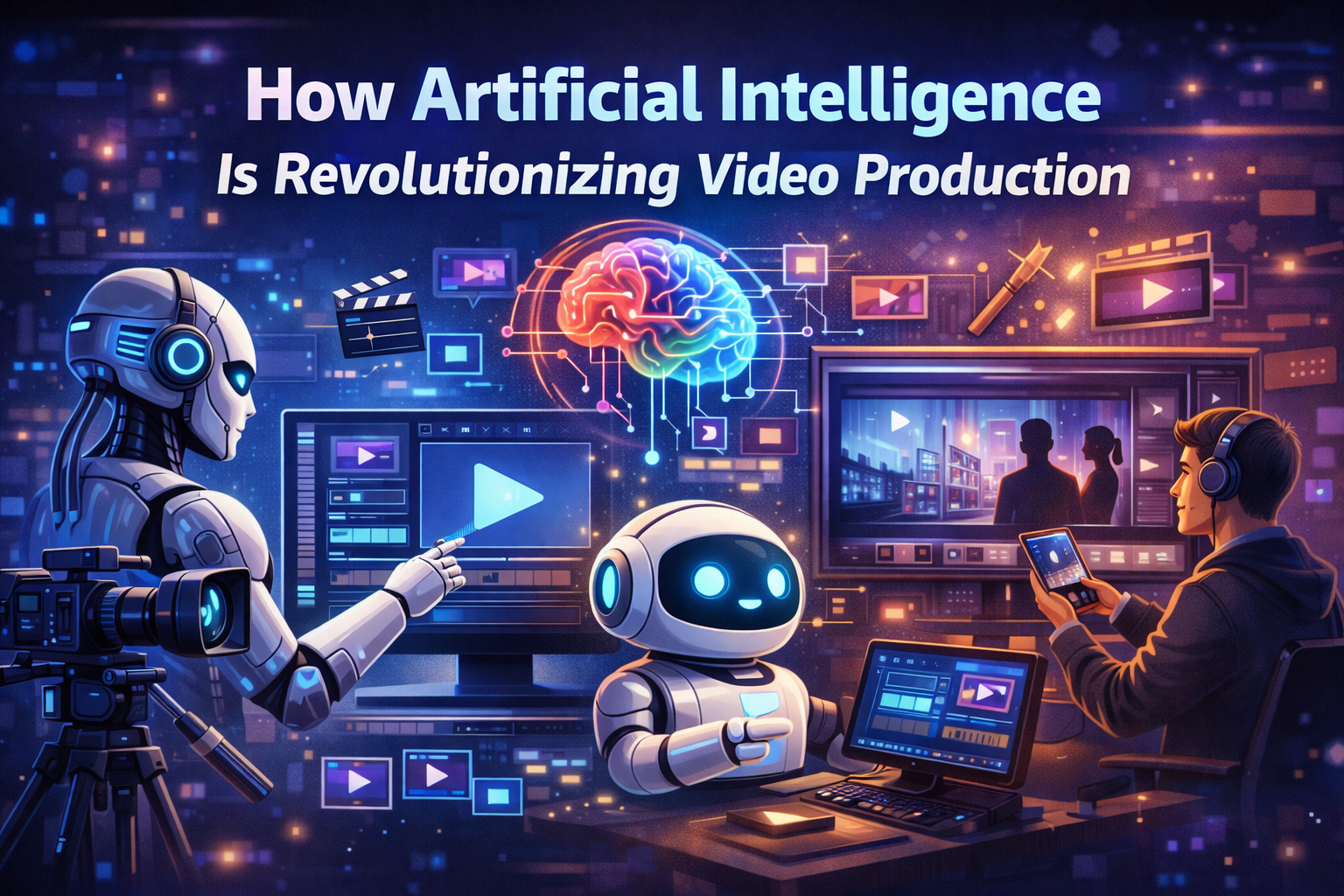
How Artificial Intelligence Is Revolutionizing Video Production
Video has become the dominant language of the digital world. From short-form content on TikTok and YouTube Shorts to in-depth corporate training and product explainers, demand for video continues to accelerate. Yet traditional video production remains expensive, time-intensive, and resource-heavy, often requiring professional editors, costly equipment, and weeks of turnaround time.
Artificial intelligence is changing that equation. By automating large portions of the video production process, AI is making high-quality video creation faster, more accessible, and far more scalable. At the center of this shift is the AI video generator, a technology that is redefining how organizations think about visual communication.
The Shift Toward AI in Content Creation
For decades, video production was largely reserved for big brands with large budgets or individuals with specialized technical skills. Smaller businesses and independent creators often faced a tradeoff: invest heavily in video or fall behind in visibility and engagement. Image to video technology allows you to turn static images into dynamic videos using animations, transitions, and AI effects. It’s a simple way to create engaging visual content for social media, presentations, or storytelling.
This shift has democratized video creation. Marketers, educators, and e-commerce operators can now produce video content at scale, enabling faster experimentation and more consistent messaging across channels.
Why AI Video Creation Continues to Accelerate
The rapid adoption of AI video tools is not accidental. Several structural forces are driving this momentum:
Speed as a Competitive Advantage
In a real-time digital environment, speed matters. AI video systems can transform a written brief into a complete video; visuals, narration, and captions included—in minutes rather than weeks.
Cost Efficiency at Scale
Traditional video production costs scale poorly. AI video generators dramatically lower marginal costs, making it feasible to produce dozens or even hundreds of videos without expanding creative teams.
Global Reach Through Localization
Multilingual voiceovers and subtitles allow companies to localize content efficiently, opening access to international audiences without separate production pipelines.
Brand Consistency
AI-driven workflows make it easier to maintain consistent branding, tone, and structure across large volumes of content, an ongoing challenge for growing organizations.
From Tools to Systems: How AI Video Platforms Are Evolving
Early AI video tools focused on automating individual tasks such as captioning or basic editing. Today’s platforms operate more like production systems, integrating multiple AI capabilities into a single workflow.
Modern AI video generators commonly offer:
- Text-to-video pipelines that convert scripts into structured video narratives
- AI presenters or avatars for consistent on-screen delivery
- Voice synthesis and dubbing across multiple languages
- Automated editing logic, including transitions, captions, and background audio
What’s notable is the emergence of platforms that don’t rely on a single AI model but instead combine multiple video generation technologies. For example, solutions like VidSpotAI illustrate a broader trend toward centralized AI video platforms, where creators can select different AI models or workflows depending on the content type. These can be short social clips, long-form explainers, or educational videos.
Rather than replacing creative decision-making, these systems act as production infrastructure, enabling teams to scale output while retaining editorial control.
Real-World Use Cases: AI Video in Practice
AI video generation is no longer experimental. It is already embedded in day-to-day operations across industries:
Marketing and Demand Generation
Teams produce product demos, ad variations, and campaign videos rapidly, allowing faster iteration and testing.
Education and Training
AI-generated explainer videos help standardize learning experiences while reducing the cost of content updates.
E-Commerce
Sellers generate product walkthroughs and feature highlights without scheduling studio shoots.
Internal Communication
Organizations use AI video tools for onboarding, policy updates, and leadership messages, often without external agencies.
Social Media and Creator Economy
Creators maintain consistent posting schedules by supplementing traditional production with AI-generated video content.
In many of these scenarios, AI platforms serve as a force multiplier, enabling small teams to operate with the output capacity of much larger organizations.
Challenges That Require Thoughtful Adoption
Despite its advantages, AI-driven video creation is not without risks:
- Authenticity concerns may arise when overusing avatars or synthetic voices
- Copyright and licensing clarity remain critical when working with generated media
- Ethical considerations, including deepfakes, demand responsible safeguards
- Creative depth still benefits from human judgment and storytelling instincts
The most successful adopters treat AI as an augmentation layer, not a replacement for human creativity.
Looking Ahead: The Next Phase of AI Video
The future of AI video production points toward even deeper integration with audience data and real-time feedback. Emerging developments may include:
- Adaptive videos that change based on viewer behavior
- Real-time generation for live or semi-live content
- Integration with AR and immersive experiences
- Smarter orchestration of multiple AI models within a single workflow
Organizations that build AI video into their content strategy early are likely to gain a structural advantage, not just in efficiency, but also in creative experimentation and global reach.
Final Thoughts
Video is no longer optional, and artificial intelligence is redefining how video is produced, scaled, and distributed. AI video generators represent more than a productivity upgrade; they signal a shift in how visual communication is designed and delivered.
An ai video generator is a powerful tool that uses artificial intelligence to help you build professional movies from simple text prompts or photos. These platforms analyze your ideas to automatically add smooth movement, realistic characters, and even background music. It is a fantastic way for anyone to produce high-quality content without needing expensive equipment or years of editing experience.
Disclaimer
The information provided in this article, “How Artificial Intelligence Is Revolutionizing Video Production,” is for general informational and educational purposes only. While the article discusses current trends, technologies, and use cases related to AI video generation, it does not constitute professional advice or a recommendation to use any specific AI tools or platforms. Results from AI video generation can vary depending on the software, inputs, and user expertise.